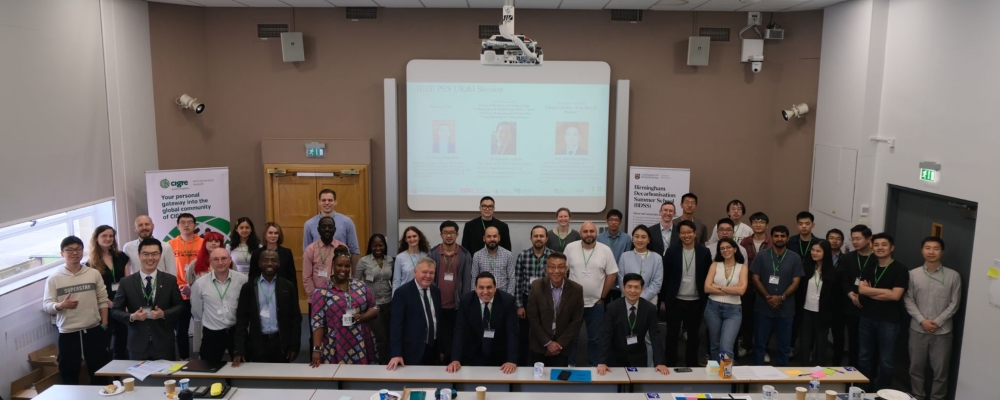
I attended the Birmingham Decarsbonisation Summer School (BDSS) two weeks ago. It was 5 amazing days in the beautiful and historic University of Birmingham. I met some brilliant PhD researchers and post-docs during the event. Industrial experts from National Grid, SSEN, GE Vernova, and many more gave very technical talks. I learnt an awful of insights and knowledge about electrical power system and the challenges the UK’s National Grid (NG) is facing in the renewable energy era.
Having abundant mechanical and thermal background but little electrical, I felt the topic power system stability a very interesting topic. To achieve and maintain a stable electrical grid, balancing the supply and demand is the most important task of the NationalGrid_ESO.
Balancing the power
Unlike heat, electricity is based on electromagnetism. Electric and magnetic fields affect each other instantaneously, this means any changes in electric quantities take place very quickly, less than seconds, even milli-seconds. This is quite an opposite phenomenon in thermodynamics where thermal quantities, e.g., temperature, usually take much longer time to happen. In other words, electricity has very less inertia.
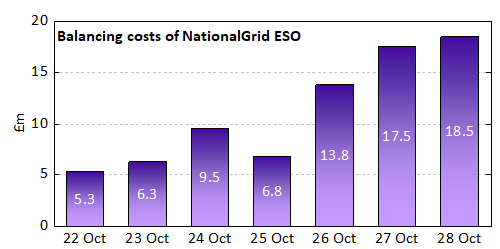
Therefore it is a very important task for system operators to balance the demand and supply all the time, minute by minute. If there is more demand, the operator needs to buy in (procure) some extra power in the area in need, and vice versa. This sounds not a big deal technically, but it is EXPENSIVE, see the chart below.
The operability challenge and the solutions
So the operators bid or offer to Balance Mechanism (BM) Suppliers to procure more power or let the genetors produce less, and this costs them millions EVERYDAY! And this will only become more expensive in the short term, as more and more fluctuating yet clean renewable energy (e.g., solar, wind) get connected to the Grid. Even though adding more renewable can help our energy department emit less carbon emission than fossil fuel power plants, these energy resources are non-dispatchable (you cannot control wind or sun light unlike coal or natural gas).
Too much non-dispatchable generators can lead to other technical issues, such as:
- less inertia;
- less short circuit level;
- less dynamic reactive power;
The consequences are dangerous to safe operation of the grid, more details are included in the report National Trends and Insights.
To overcome the operability challenges, various specific solutions are sought to provide additional inertia. Basically these can be categorised into two ways:
- Keep the synchronous machines running on reserve or running low to provide spinning mass;
- Implement Virtual Synchronous Machines (VSM) or Synchronverter to give synthetic inertia.
The group work and reflections
After the first two days fully packed with talks, there was a group work that I really looked forward to before the summer school. A group of 4-5 participants were assigned with a real-life High-Voltage Alternating Current (HVAC) transmission line upgrade project. The tasks include:
- Provide a technical solution to the project that is feasible, operable, economical;
- Apply cost-benefit analysis to the solution;
- Supply chain analysis;
- Environmental and social impacts.
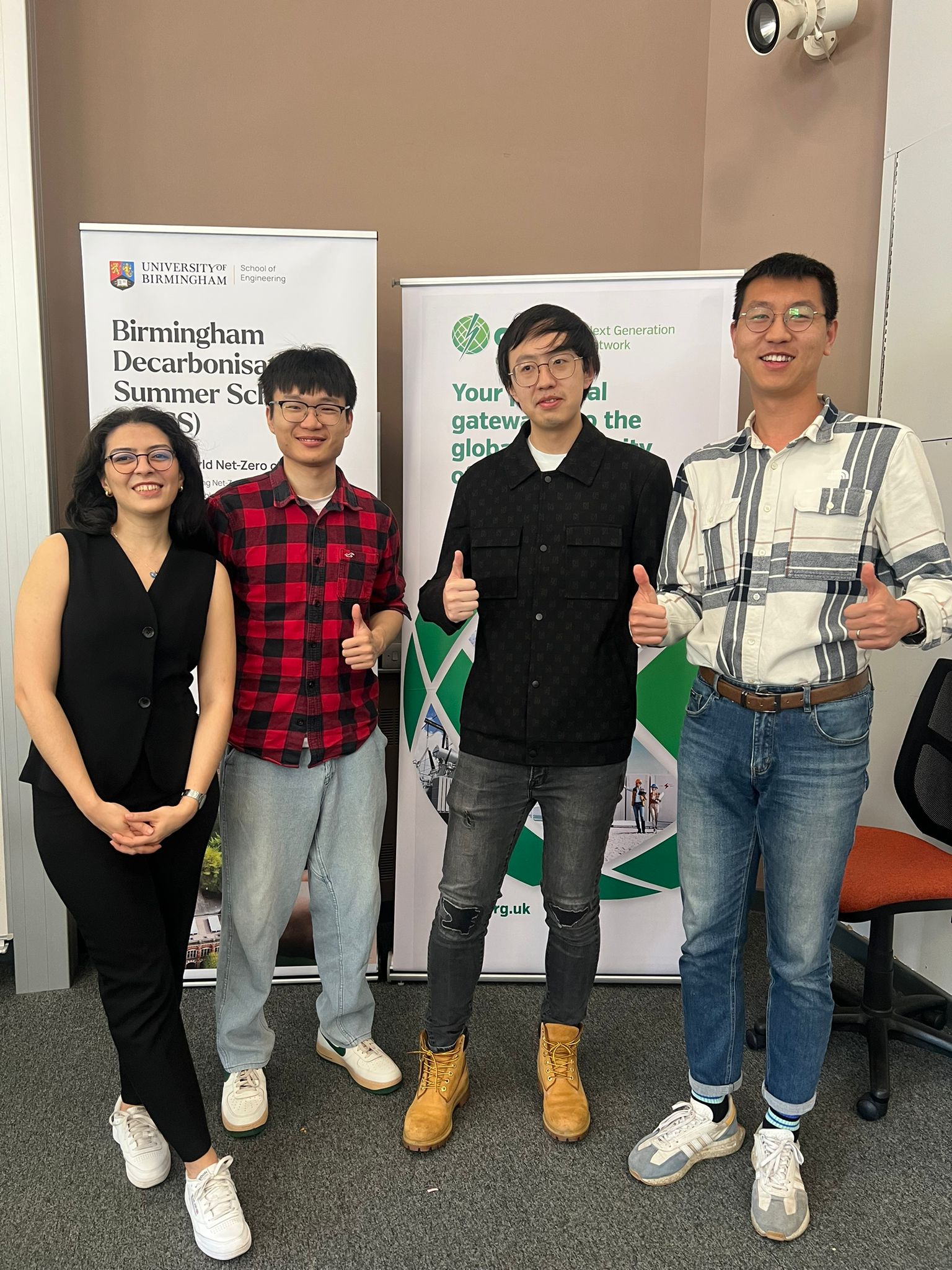
Our team did well in the presentation though the technical solution wasn’t perfect, partly because our teams was disadvantaged in electrical expertise.
What we did well
- set deadlines early.
The group work has quite a tight schedule. We set up several deadlines (like what time to finish each part, when to do rehearsal) to remind ourselves not to lag behind the schedule and make some quick decisions.
- set up communication
We used Google Drive and Whatsapp group as the working and communication channels.
What I can do better
- Keep focused
Although I took a lot time trying to come up with the technical solution and discussions. I could’ve worked better on transmission cable selection. I eventually found the data that I overlooked in the beginning, but it was a little to late to improve the solution.
- Create a positive and and supportive team environment
When I found the initial solution was not working, and we decided to go for plan B. I have to admit that I was frustrated and didn’t believe the new solution was a good plan. I don’t know if my negative attitude affected other team members. But now I realise to only if the team members share the same goal and support each other can a team make a dream work!